تخطي للذهاب إلى المحتوى

Who We Are

Headquartered in the UAE and California, with expanding operations in China and Turkey, Decision Intelligent is at the forefront of AI-driven business solutions. We empower organizations across industries to harness the power of artificial intelligence and make informed, data-backed decisions that drive success.


What We Do


We provide cutting-edge AI and digital transformation services that reshape the way businesses operate, innovate, and scale. Our expertise spans various industries, equipping enterprises with intelligent solutions tailored to their unique challenges.

Our Mission

To empower businesses through AI and automation, enabling smarter, faster, and more effective decision-making.


Latest news

Highlight your history, showcase growth and key milestones.


Before 3000 BC


The Dawn of Trade

Commerce began with simple barter. Without a universal currency, goods and services were exchanged based purely on immediate physical needs, trust, and human memory.

Commerce began with simple barter. Without a universal currency, goods and services were exchanged based purely on immediate physical needs, trust, and human memory.
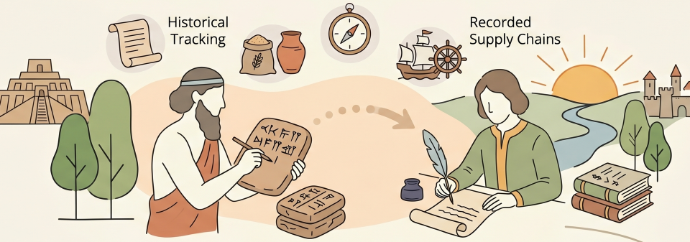
The invention of writing allowed merchants to document transactions on clay tablets and parchment. This crucial step introduced historical tracking, basic accountability, and the first recorded supply chains.
3000 BC - 1400 AD


The Age of Written Records

The invention of writing allowed merchants to document transactions on clay tablets and parchment. This crucial step introduced historical tracking, basic accountability, and the first recorded supply chains.

1400s - 1700s


The Renaissance of Commerce 

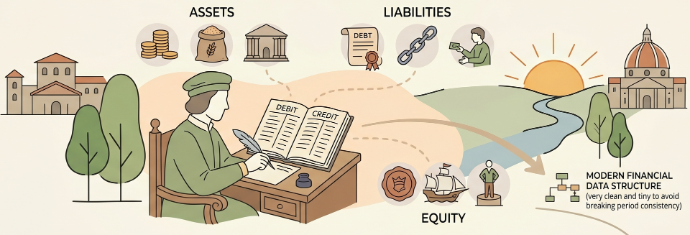
The formalization of double-entry bookkeeping revolutionized commerce. For the first time, businesses could systematically track assets, liabilities, and equity, laying the permanent groundwork for modern financial data structure.

formalization of double-entry bookkeeping revolutionized commerce. For the first time, businesses could systematically track assets, liabilities, and equity, laying the permanent groundwork for modern financial data structure.


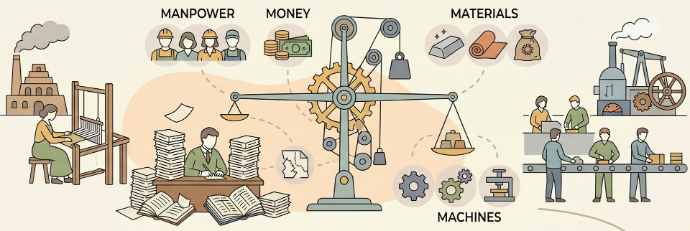
As manufacturing shifted from hand production to steam-powered machines and assembly lines, businesses faced unprecedented scales. It was during this era that the core pillars of production management emerged as a complex balancing act: the 4 Ms (Manpower, Money, Materials, and Machines). Paper-based records struggled to keep up with the overwhelming task of coordinating these resources simultaneously.
1760s - 1930s

The Industrial Revolution & Mass Production

As manufacturing shifted from hand production to steam-powered machines and assembly lines, businesses faced unprecedented scales. It was during this era that the core pillars of production management emerged as a complex balancing act: the 4 Ms (Manpower, Money, Materials, and Machines). Paper-based records struggled to keep up with the overwhelming task of coordinating these resources simultaneously.
1940s - 1960s


The Dawn of Computing & Inventory Control 

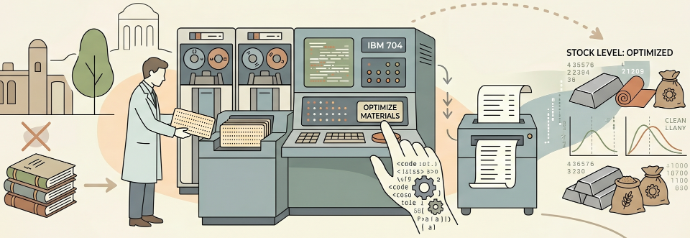
Mainframes and punch cards replaced manual ledger books. Businesses took their first real steps toward digital transformation by automating basic Inventory Control (IC) to mathematically track and manage stock levels, taking the first digital swing at optimizing Materials.

The Dawn of Computing & Inventory Control
The Birth of MRP (Material Requirements Planning)
1970s

The Birth of MRP (Material Requirements Planning)

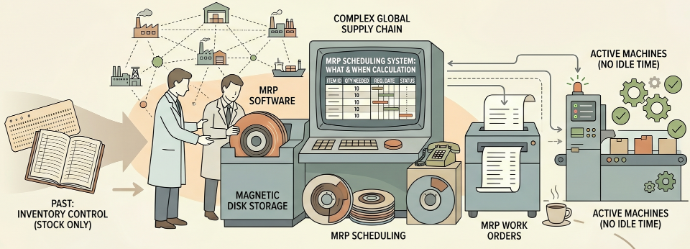
As supply chains grew increasingly complex, simply knowing what was in stock wasn't enough. MRP software emerged to calculate exactly what Materials were needed and when they were needed, completely transforming production scheduling and ensuring Machines didn't sit idle.

1980s

The Evolution to MRP II (Manufacturing Resource Planning) 

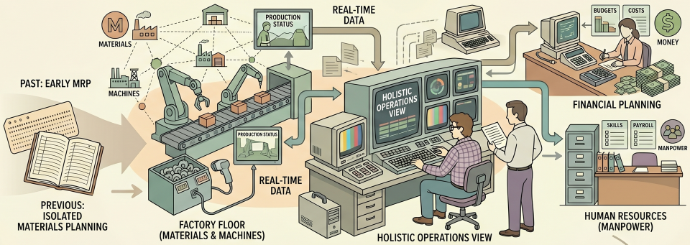
Business leaders realized that manufacturing didn't operate in a vacuum. MRP II expanded upon early systems to finally connect the factory floor (Materials and Machines) with financial planning (Money) and human resources (Manpower), creating a more holistic view of operations.

 
Business leaders realized that manufacturing didn't operate in a vacuum. MRP II expanded upon early systems to finally connect the factory floor (Materials and Machines) with financial planning (Money) and human resources (Manpower), creating a more holistic view of operations.
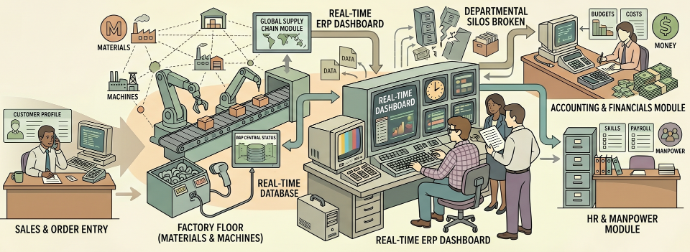
 The term "Enterprise Resource Planning" (ERP) was officially coined. Systems integrated every internal facet of an organization—sales, accounting, HR, and manufacturing—into a single, unified digital platform. For the first time in history, all 4 Ms were fully integrated, visible, and manageable in real-time, permanently breaking down departmental silos.
1990s

The ERP Breakthrough

The term "Enterprise Resource Planning" (ERP) was officially coined. Systems integrated every internal facet of an organization—sales, accounting, HR, and manufacturing—into a single, unified digital platform. For the first time in history, all 4 Ms were fully integrated, visible, and manageable in real-time, permanently breaking down departmental silos.

2000s


The Cloud & Web Revolution 

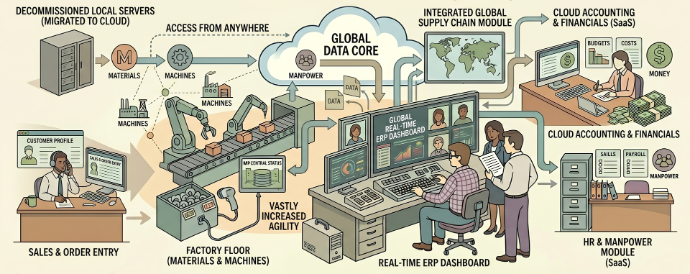
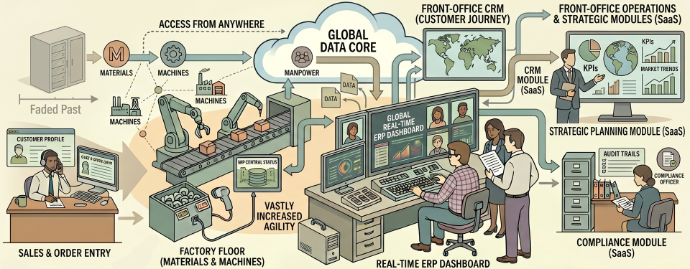
Business software moved from local servers to the internet. The advent of Cloud Computing and Software-as-a-Service (SaaS) allowed companies to access global, real-time enterprise data from anywhere, vastly increasing the agility with which they could deploy their resources.


 As the internet revolutionized connectivity, companies demanded more than just internal resource tracking. ERPs evolved into comprehensive Business Management Systems (BMS). A true BMS went beyond the 4 Ms, expanding outward to integrate front-office operations like Customer Relationship Management (CRM), strategic planning, and compliance workflows. Coupled with Cloud Computing and Software-as-a-Service (SaaS), these overarching systems allowed leaders to manage their entire global enterprise ecosystem from anywhere.
2000s

The Evolution to Business Management Systems (BMS)

As the internet revolutionized connectivity, companies demanded more than just internal resource tracking. ERPs evolved into comprehensive Business Management Systems (BMS). A true BMS went beyond the 4 Ms, expanding outward to integrate front-office operations like Customer Relationship Management (CRM), strategic planning, and compliance workflows. Coupled with Cloud Computing and Software-as-a-Service (SaaS), these overarching systems allowed leaders to manage their entire global enterprise ecosystem from anywhere.

2010s


The Rise of Business Intelligence

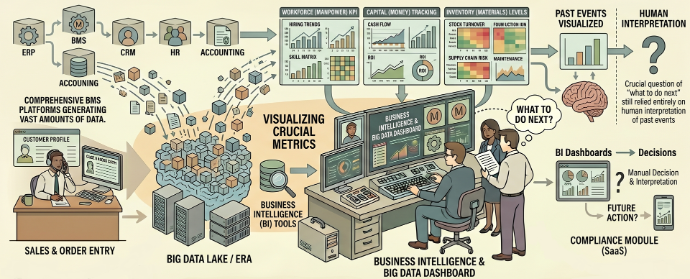
With comprehensive BMS platforms generating vast amounts of data, the era of Big Data arrived. Dashboards and Business Intelligence (BI) tools empowered organizations to visualize metrics regarding their workforce, capital, inventory, and equipment. However, answering the crucial question of "what to do next" still relied entirely on human interpretation of past events.

With comprehensive BMS platforms generating vast amounts of data, the era of Big Data arrived. Dashboards and Business Intelligence (BI) tools empowered organizations to visualize metrics regarding their workforce, capital, inventory, and equipment. However, answering the crucial question of "what to do next" still relied entirely on human interpretation of past events.
The ultimate paradigm shift. We are no longer just looking at how resources were used in the past; we are dictating their optimal future. AI revolutionizes the enterprise by bridging data with automated action—predicting outcomes; optimizing the alignment of Manpower, Money, Materials, and Machines, and empowering autonomous, intelligent decision-making at scale.


2020s - Future

The Age of Decision Intelligence

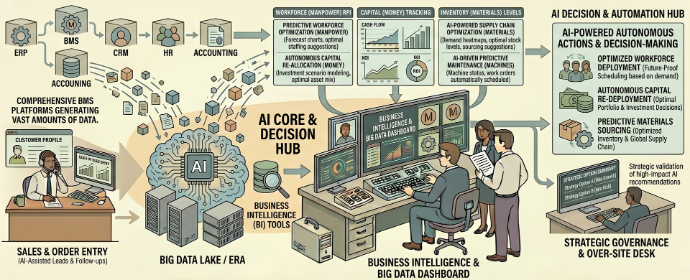
The ultimate paradigm shift. We are no longer just looking at how resources were used in the past; we are dictating their optimal future. AI revolutionizes the enterprise by bridging data with automated action—predicting outcomes; optimizing the alignment of Manpower, Money, Materials, and Machines, and empowering autonomous, intelligent decision-making at scale.

Our Core Services

We excel in delivering tailored, cutting-edge solutions that empower businesses to grow and thrive.
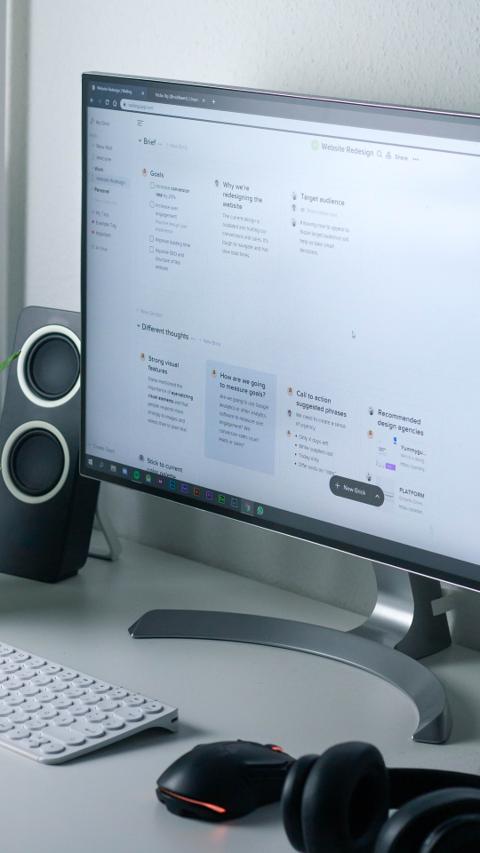
ERP & Business Process Automation

Guiding startups from concept validation to market expansion.

Startup Consulting & Mentorship & Digital Transformation Strategies

Guiding startups from concept validation to market expansion & Future-proofing businesses with innovative, AI-integrated solutions.
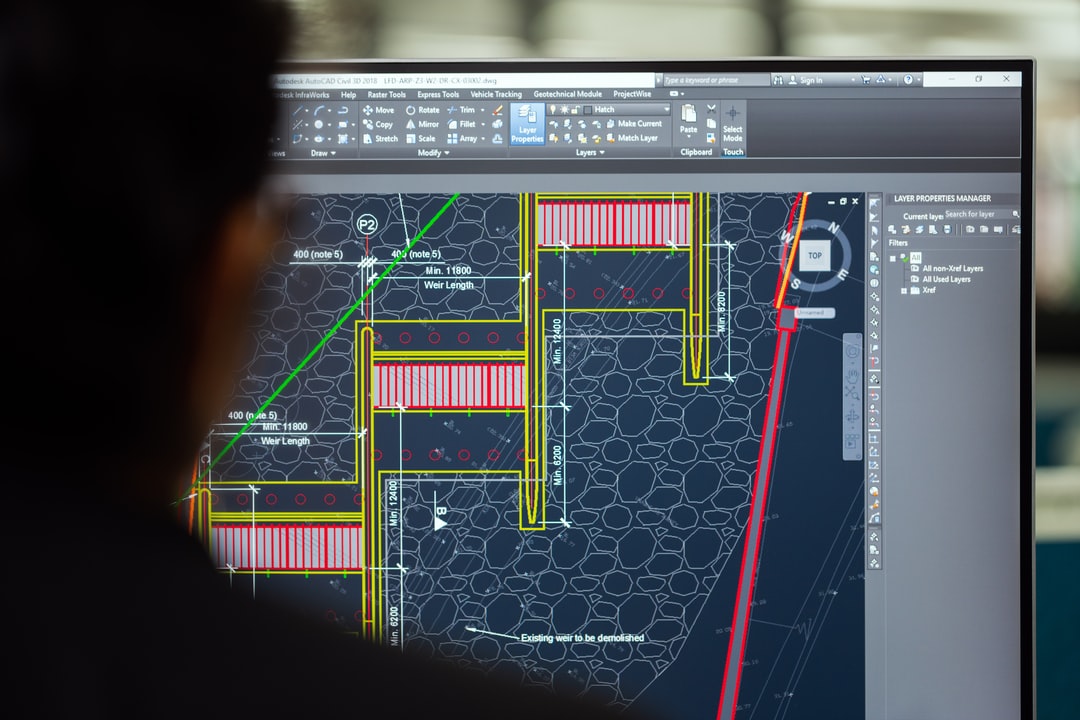
AI & Data Intelligence & Cloud & Infrastructure Solutions

Predictive analytics, machine learning, and data-driven decision support systems, Scalable, secure, and flexible cloud-based digital ecosystems.

Join the AI Revolution

At Decision Intelligent, we don’t just follow trends—we create them. Partner with us to unlock the full potential of AI-driven insights, automation, and data intelligence

 Book Free Demo 

Exceptional user experiences.

Meet our team.

Dedicated professionals driving our success

Nima Etesamifar

Chief Executive Officer

Specializes in data analytics, ERP systems, and software development. With expertise in Business Intelligence (BI) and technology leadership, he drives innovation. His work empowers organizations to make smarter, data-driven decisions.

Pouria Shahmiri

Head of Business Development

Pouria Shahmiri leverages over six years of experience in quantitative finance and algorithmic trading infrastructure. He currently leads initiatives providing high-frequency trading infrastructure for cryptocurrency markets and offers advanced trading tools through his company, Kepler.tc. Pouria also provides consulting services in algorithmic trading infrastructure and portfolio management.  

Arash Rahmati

Chief Engineering Officer

previously a Senior Full Stack Web Developer, has demonstrated expertise in modern web technologies and a commitment to delivering high-quality software solutions. His experience in developing responsive and dynamic user interfaces, coupled with his proficiency in back-end development, positions him as a valuable asset to the engineering team.

Omid Saghi

Chief Financial Officer

Omid Saghi is the Chief Financial Officer at Decision Intelligent, bringing over 20 years of experience in finance and enterprise systems. He previously served as CEO in two leading companies, driving large-scale digital transformation and operational excellence

Reza Arabi Zanjani

Chief Operation Officer

With over 10 years of experience in the financial markets, operation technology, and branding industry, Reza actively explores ways to integrate new modalities and methods into economic and financial concepts.